



How to take care of Newborn Skin | Tips for fair skin and prevent rashes
Newborn Skin Care Tips: Keep Baby's Skin Healthy & Rash-Free
Every parent dreams of baby-soft skin — but what happens when your baby's own skin needs extra care? Pigmentation and rashes aren't only an "older skin" problem; they can show up in a baby's very first weeks. Diapers, phototherapy, cradle cap, allergies, heat, wetness, drool, or harsh chemicals can all leave a mark on a newborn's feather-soft skin. So what's actually best for newborn skin? This guide walks through a complete, natural baby skin care routine — including rash prevention, safe oils, and a few things to avoid — so you can care for your little one with confidence.
Daily Newborn Skin Care Routine
A newborn's skincare needs are simple, gentle, and don't require a shelf full of products. Here's a practical daily rhythm you can follow from the first weeks onward.
| Time of Day | What to Do | Why It Helps |
|---|---|---|
| Morning | 5–10 minutes of early sunlight (before 9 am) | Natural vitamin D; supports a healthy skin glow |
| Before bath (alternate days) | Gentle full-body massage with a cold-pressed oil | Nourishes skin, improves circulation, soothes dryness |
| Bath time | Lukewarm water with raw milk or curd; no soap needed | Cleanses gently without stripping natural skin oils |
| Non-bath days | Wipe face, palms, finger/toe folds, neck creases, and genital area with a damp soft cloth | Keeps moisture-prone folds clean and rash-free |
| After bath / as needed | A few drops of sweet almond oil on dry patches | Replaces the need for chemical-based lotions |
| Before head wash | Rub a teaspoon of emollient oil into the cradle cap area | Loosens flakes gently without scratching |
How to Keep Baby's Skin Healthy
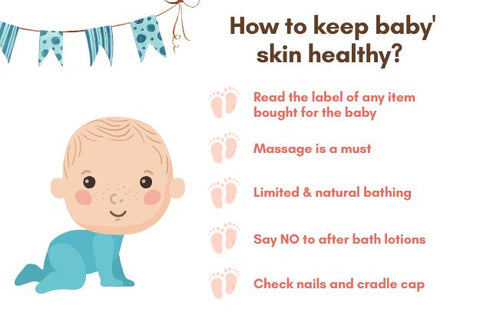
To begin a good infant skincare regime, stick to single-ingredient cold-pressed oils only. Your baby is a precious new arrival — they don't need anything synthetic or unnatural on their skin.
1. Read the Label
Make it a habit to read the label carefully before buying anything for your little one (and for yourself too). Make sure it lists only plant-based, natural ingredients suited to nourish delicate newborn skin — this is the easiest way to avoid hidden synthetic fillers and fragrances.
2. Massage Is a Must
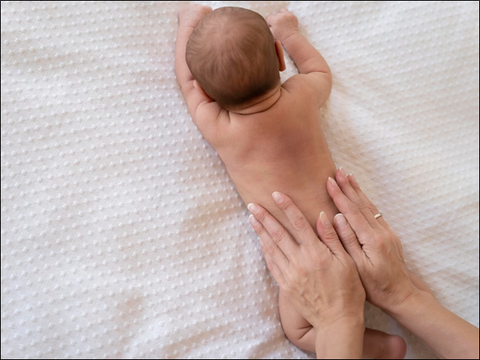
A few patches of dry skin are completely normal in the first few weeks and usually fade on their own without special treatment. Still, it helps to do what generations before us have done — massage your newborn with a pure virgin gentle baby oil for newborn skin, such as sweet almond oil, coconut oil, or olive oil. These help even out skin tone and relieve dryness. Choose whichever suits your budget and your baby's skin best.
3. Limited & Natural Bathing
New parents often ask how often newborns actually need a bath. The answer: not daily. Bathing every alternate day, or even every two days, is enough. Newborns don't need a special baby soap or body wash either — raw milk or curd works beautifully to clean soft skin. A curd or milk bath can also help improve skin that's darkened from phototherapy (a common jaundice treatment). On non-bath days, use a damp, soft microfiber cloth to clean the face, palms, the spaces between tiny fingers and toes, neck folds, and the genital area.
4. Say No to After-Bath Lotions
Your baby's skin usually doesn't need an after-bath cream or lotion once they've had a good massage and a milk bath. If their skin is on the drier side, a few drops of sweet almond oil are all the extra nourishment they need — no synthetic lotion required.
5. Check Nails and Cradle Cap
Keep an eye on your baby's nails, since they can scratch and hurt themselves without realizing it. Similarly, take care with cradle cap — never scratch or pick at it. Instead, rub a teaspoon of any cold-pressed emollient oil onto the area before a head wash to loosen flakes gently.
Age-Specific Newborn Skin Care Tips
0–4 Weeks
Skin is at its most sensitive in these early weeks. Stick to oil massage and water (or milk) cleansing only — avoid soaps, scented wipes, and talcum powder. Peeling skin and small dry patches are normal as the baby sheds the vernix layer and are not a cause for concern.
1–3 Months
Skin barrier function strengthens during this period, but heat rashes and cradle cap are common. Keep baby cool and dry, dress in breathable cotton, and continue gentle oil massage. This is also a good time to start a brief daily sunlight routine for natural vitamin D.
3–6 Months
As babies become more active, drool rash and friction rash around the neck and chin folds become more common, especially with teething. Keep these areas dry and apply a light layer of cold-pressed oil after cleaning to form a gentle protective barrier.
Newborn Rash Prevention Tips
- Change diapers frequently and let the skin air-dry for a minute before redressing.
- Dress baby in soft, breathable cotton fabrics — avoid synthetic blends that trap heat and moisture.
- Keep neck, underarm, and thigh folds clean and completely dry, since moisture trapped in folds is a common rash trigger.
- Avoid scented wipes, talcum powder, and heavily fragranced products near the skin.
- Patch test any new oil or product on a small area of skin and wait 24 hours before full use.
Baby Skincare Do's and Don'ts
| Do | Don't |
|---|---|
| Use single-ingredient cold-pressed oils | Use products with added fragrance or dyes |
| Bathe every alternate day with milk or curd | Bathe daily with soap-based body wash |
| Pat skin dry gently after a bath | Rub the skin vigorously with a towel |
| Patch test any new oil before full use | Apply a new product all over without testing first |
| Let skin breathe between diaper changes | Leave a wet diaper on for long periods |
| Consult a pediatrician for persistent rashes | Self-treat rashes with pus, blood, or fever present |
How Can I Improve My Baby's Skin Color?
Every baby is beautiful in their own skin. If a baby's deeper complexion comes from genetics, no remedy will — or should — change that. That said, there's no harm in trying gentle, natural home remedies for fair baby skin if you're curious, as long as expectations stay realistic.
A simple massage with an emollient cold-pressed oil followed by a milk bath is usually enough to support an even, healthy skin tone over time. Steer clear of store-bought chemical-based products — they tend to do more harm than good on a baby's delicate skin.
What Can Make Baby Skin Glow?
Adequate fluids (appropriate for their age) and limiting sun exposure during peak hours both help prevent baby's facial skin from darkening. That said, a short, mild sunbath is genuinely good for every baby — early morning sunlight helps them absorb vitamin D naturally and can add a healthy, blushy glow to their skin.
You can also try this homemade ubtan for a gentle glow: mix 1 tbsp fine gram flour, a pinch of turmeric powder, a few strands of pure saffron (optional), and raw milk into a paste. Gently rub this baby face pack on the skin two to three times a week. Don't overdo it — their skin is extremely delicate and too much exfoliation can irritate it.
Give Your Baby's Skin the Gentlest Care
100% pure, single-ingredient cold-pressed oils — safe, natural, and free from synthetic additives.
Shop Natural Baby-Safe Oils for Newborn Skin Care →Takeaway
Single-ingredient cold-pressed oils are usually all your baby needs to keep their delicate skin nourished and rash-free — no chemical-based products required. That said, always consult a pediatrician promptly if a rash looks severe or contains pus or blood.
You Might Also Like
Frequently Asked Questions
How often should I bathe my newborn?
Newborns don't need a daily bath. Bathing every alternate day, or even every two to three days, is enough. On the days you skip a bath, gently clean the face, palms, finger and toe folds, neck creases, and genital area with a damp soft cloth.
How can I improve my baby's skin color naturally?
A gentle massage with a cold-pressed oil and a milk or curd bath can help support an even skin tone over time. If a baby's deeper complexion is genetic, these remedies won't change that — and that's completely normal and healthy.
What can make a baby's skin glow naturally?
Adequate fluids for their age, limited sun exposure, and a short daily dose of early morning sunlight for natural vitamin D can support a healthy glow. A homemade gram flour and turmeric ubtan used two to three times a week can help too, in moderation.
When should I see a doctor about my baby's skin rash?
Consult a pediatrician immediately if a rash contains pus or blood, spreads quickly, comes with a fever, or doesn't improve with simple home care within a few days.
Be natural. Grow naturally. Choose nourishment.
1 comment
I don’t know gram flour and ubtan.