



Minimal Skincare Routine: Why 3 Steps Are Enough for Healthy, Glowing Skin
A minimal skincare routine can be just as effective—if not more—than a complex multi-step regimen. Overloading your skin with too many products leads to irritation, breakouts, and poor results. Focusing on three essential steps—cleansing, hydration, and protection—maintains a strong skin barrier and delivers a consistent, visible glow within 2–4 weeks.
Why Most Skincare Routines Fail Despite "Good" Products
You've built a careful routine. Good products, consistent application, multiple steps. And yet your skin is breaking out, feeling tight, or just not improving.
The problem isn't the products — it's the volume.
This is exactly why a simple skincare routine for beginners built around three focused steps consistently outperforms a complicated ten-step approach. Most routines fail because too many products compete for absorption, excessive actives irritate the skin barrier, and the complexity makes consistency nearly impossible.
The pattern is familiar: you start simple, add a serum, add an exfoliant, try a trending ingredient, and end up with skin more reactive than when you started.
The biggest misconception: "More products equal better skin." Your skin has a limited capacity to absorb and process ingredients. When overloaded, it becomes stressed — not healthier. A minimal skincare routine works because it removes the competition, reduces irritation, and focuses only on what skin actually needs to thrive.
The Science Behind Why 3 Steps Are Enough
Your skin naturally performs three essential functions: cleansing (removing impurities), hydration (maintaining water balance), and protection (acting as a barrier against damage). A good skincare routine should support these functions—not replace or override them.
The ideal three-step structure: a cleanser removes dirt, oil, and buildup. A hydration layer (toner or gel) restores moisture balance and prepares skin for the next step. A moisturizer with SPF locks hydration in and protects against environmental damage.
This works because it prevents ingredient overload, supports skin barrier repair, and improves absorption efficiency. Each product has room to actually work instead of competing with five others.
Your skin barrier — the outermost protective layer — is especially vulnerable to overuse. Stacking too many actives weakens it, leading to dryness, sensitivity, and the breakouts people assume need more products to fix. A minimal routine protects this barrier while still delivering visible results.
Minimal Routine vs Multi-Step Routine: Honest Comparison
Before simplifying your routine, it's worth seeing exactly what changes—and why fewer steps so consistently outperform it.
| Feature | Minimal Routine (3 Steps) | Multi-Step Routine (7–10 Steps) |
|---|---|---|
| Number of Products | 3–4 | 7–10+ |
| Skin Stress | Low | High |
| Consistency | Easy to maintain daily | Difficult, often skipped |
| Risk of Irritation | Low | High, especially with actives |
| Absorption Efficiency | High — no competition | Low — products compete |
| Results | Stable, long-term | Often inconsistent |
| Barrier Health | Protected and strengthened | Frequently compromised |
Complexity doesn't improve results—it introduces more variables that can go wrong. Three focused steps executed consistently beat ten random steps every time.
5 Mistakes Making Your Routine Ineffective
1. Using Too Many Products Simultaneously
Each product added beyond three reduces the absorption efficiency of every other product in the routine. Fix: Identify your three non-negotiables and remove the rest.
2. Combining Too Many Actives
Retinol, AHAs, vitamin C, and niacinamide used together overwhelm skin and damage the barrier. Fix: one active maximum per routine, used on alternate days if needed.
3. Skipping the Hydration Step
Jumping from cleanser to moisturizer skips the step that prepares skin to actually absorb what follows. Fix: always include a lightweight hydration layer between cleansing and sealing.
4. Switching Products Before Seeing Results
Skin needs a minimum of two to four weeks to adapt to any product. Switching earlier resets the process and makes it impossible to identify what's working. Fix: commit to your three steps for at least four weeks before evaluating.
5. Following Trends Over Your Actual Skin Type
What works for someone with dry skin will clog pores on oily skin. What clears acne for one person may irritate another. Fix: Build your routine around your skin's behavior, not what's popular.
Real Results: What Customers Experienced
★★★★★
"I was using 9 products, and my skin was constantly reactive. Stripped back to cleanser, rice water toner, and moisturizer. Redness reduced in 10 days. By week 4, my skin looked better than it had in years."
— Priya, 27, Mumbai★★★★★
"I was scared that 3 steps wouldn't be enough for my dull skin. The rice water toner made the biggest difference—skin felt hydrated for the first time without heaviness. Glow appeared around week 3."
— Meera, 31, Delhi★★★★★
"My acne got worse the more products I added. Going minimal felt counterintuitive but cleared my skin within 3 weeks. Less is genuinely more."
— Ananya, 24, HyderabadWhere Fermented Rice Water Toner Fits
The hydration step is the most underestimated in a minimal routine — and choosing the right product here determines how well everything else performs.
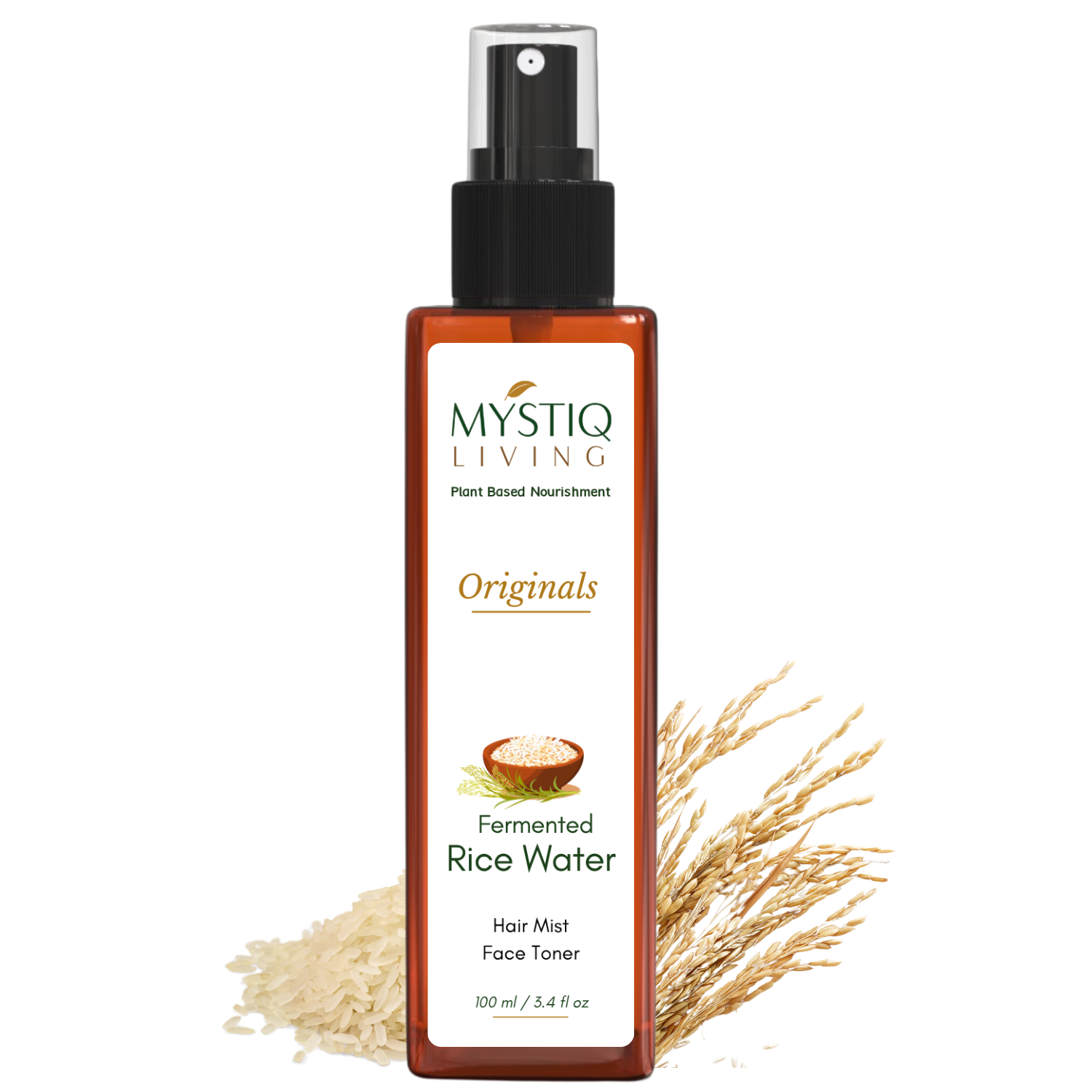
Mystiq Living Fermented Rice Water Toner — fermented for deeper penetration, lightweight for daily use. Using a rice water toner for glowing skin improves skin texture, brightens uneven tone, and boosts absorption of the moisturizer applied after. It delivers meaningful hydration in one step without adding complexity or weight to the routine.
Used after cleansing and before moisturizer, it fills the hydration gap that makes three-step routines genuinely complete — not compromised.
Best for: Dull, dehydrated, or uneven skin. Ideal for beginners building their first routine and for anyone simplifying from a multi-step approach.
Use with caution if you have a known sensitivity to fermented ingredients—patch test before first use.
Step-by-Step Minimal Routine
Morning Routine
Gentle gel cleanser → Fermented rice water toner → Moisturizer with SPF
Night Routine
Gentle cleanser → Rice water toner → Moisturizer (skip SPF, add a single active if needed)
💡 Apply each product on slightly damp skin for better absorption.
⚠️ Never add a step "just because others are doing "it"—your skin's response is the only metric that matters.
Realistic Results Timeline
| Timeline | What You'll Notice |
|---|---|
| Week 1–2 | Reduced irritation, better hydration, less tightness |
| Week 3–4 | Smoother texture, balanced oil production |
| Week 4–6 | Visible glow, improved clarity and tone |
Consistency with three steps consistently outperforms inconsistency with ten.
Myths vs Facts
| Myth | Fact |
|---|---|
| More products give faster results | Overuse damages the barrier and slows results |
| Minimal routines aren't effective | Simplicity improves consistency, which drives results |
| You need different products for every concern | Core concerns often resolve with basic, consistent care |
| Skincare must be complicated to work | Simple routines are measurably more effective for most skin types |
Frequently Asked Questions
Q. Is a three-step routine really enough for glowing skin?
A. Yes — when done consistently. Glowing skin results from a healthy, hydrated barrier, not from the number of products applied. Three focused steps achieve this more reliably than ten competing ones.
Q. Can I add a serum to a minimal routine?
A. Only if there's a specific, unresolved concern. A serum for acne or pigmentation can be added as a fourth step — but only one, and only when the three-step base is stable.
Q. Can a minimal routine help with acne?
A. Often yes. Overloaded routines are a leading cause of adult acne. Reducing products removes irritants, competing actives, and pore-clogging ingredients that frequently trigger breakouts.
Q. Is the rice water toner suitable for oily skin?
A. Yes — it's lightweight and non-comedogenic. It hydrates without adding oil or heaviness, making it suitable for oily and combination skin types in both morning and night routines.
Final Takeaway
A minimal skincare routine isn't about doing less — it's about doing what actually works. Three steps, done consistently, support your skin's natural functions without the stress, irritation, or unpredictability that comes from overcomplication.
If your routine feels overwhelming or your skin feels reactive, simplifying is almost always the right move. Healthy, glowing skin comes from the right products used correctly — not from more of them.
Healthy skin comes from the right steps done consistently — not from doing more.
Skin is a living ecosystem.
Not a problem to be corrected.
While the beauty industry pushes stronger acids and aggressive actives, the real cost is skin that becomes reactive, dependent, and sensitive over time. We've taken a different path — one that works with your skin, not against it.