



Damaged Skin Barrier: Signs, Causes & How to Repair It Naturally
If your skin feels irritated, dry, or suddenly more sensitive, you may be dealing with a compromised surface and need to learn how to repair a damaged skin barrier effectively. The key to natural skin barrier repair is simplifying your routine, restoring hydration, and using barrier-supporting ingredients. Done correctly, your skin becomes calmer, stronger, and visibly healthier within a few weeks.
Why Skin Barrier Damage Happens — And Why Most Routines Make It Worse
Your skin has been feeling reactive, dry, or breaking out despite a careful routine. You add more products trying to fix it. The irritation gets worse.
This is the most common barrier-damage cycle, and the routine itself is usually the cause.
Understanding how to heal your skin barrier naturally starts with recognizing what's causing the damage. A damaged skin barrier is rarely caused by one thing—it's typically the result of overdoing skincare: over-exfoliation, combining too many actives, harsh cleansers, or environmental stress from pollution and UV exposure. The problem is that most people respond by doing more — more serums, more treatments, more actives.
The biggest misconception: "If my skin is damaged, I need stronger products."
In reality, damaged skin needs less intervention, not more. Think of your skin barrier like a protective wall. Adding strong ingredients to compromised skin is like applying pressure to a cracked structure — it deepens the damage instead of repairing it.
How the Skin Barrier Actually Works
Your skin barrier — the stratum corneum — functions like a brick-and-mortar system. Skin cells are the bricks; lipids (natural oils) are the mortar holding everything together.
When intact, this structure locks in moisture, blocks out irritants, and maintains overall skin balance. When it's damaged, moisture escapes, irritants enter more easily, and skin becomes reactive and inflamed.
The key insight: healthy skin isn't just about adding hydration—it's about retaining it. This is why barrier repair focuses on restoring lipids, reducing irritation, and supporting the skin's natural healing process rather than introducing new ingredients.
Damaged vs Healthy Skin Barrier: How to Tell the Difference
| Feature | Damaged Barrier | Healthy Barrier |
|---|---|---|
| Texture | Rough, flaky, tight | Smooth, soft, comfortable |
| Sensitivity | Reacts to most products | Tolerates routine well |
| Hydration | Dehydrated, dull | Well-balanced, plump |
| Breakouts | Frequent, slow to heal | Minimal, heals quickly |
| Appearance | Red, uneven, inflamed | Glowing, calm, even |
If three or more of these describe your skin right now, barrier repair — not a new serum — is your first priority.
5 Mistakes Slowing Down Your Repair
- Over-exfoliating: Daily scrubs or acids strip the protective layer faster than skin can rebuild it. Pause exfoliation entirely during the repair phase, then reintroduce once weekly at most.
- Using too many actives simultaneously: Retinol, acids, and vitamin C combined overwhelm already sensitive skin. Keep your routine to three steps maximum during repair—no actives until skin stabilizes.
- Skipping moisturizer: Using only serums or oils without a proper moisturizer leaves skin without a hydration-sealing layer. A barrier-repair moisturizer is non-negotiable during this phase.
- Cleansing too frequently: Washing more than twice daily strips the natural oils your skin needs to rebuild its barrier. One gentle cleanse in the morning and one at night is sufficient.
- Switching products too quickly: Barrier repair takes time. Changing products every few days prevents skin from stabilizing and resets the healing process. Commit to a consistent routine for at least three to four weeks before evaluating results.
Real Results: What Customers Experienced
★★★★★
"I was combining retinol, vitamin C, and an AHA every night. My skin was red and flaking constantly. Stripped everything back to a gentle cleanser, moisturizer, and jojoba oil. Redness started calming within 10 days."
— Priya, 29, Delhi★★★★★
"I kept adding products thinking something wasn't working. Turned out I was over-exfoliating twice a week and using three actives. Paused everything and focused on sealing hydration with jojoba oil. Texture improved completely by week 5."
— Meera, 34, Pune★★★★★
"My skin became sensitive out of nowhere. The only change that helped was simplifying—a gentle cleanser, moisturizer, and jojoba as the last step. Visible improvement within 3 weeks without adding a single new product."
— Ananya, 26, BangaloreWhere Jojoba Oil Fits Into Barrier Repair
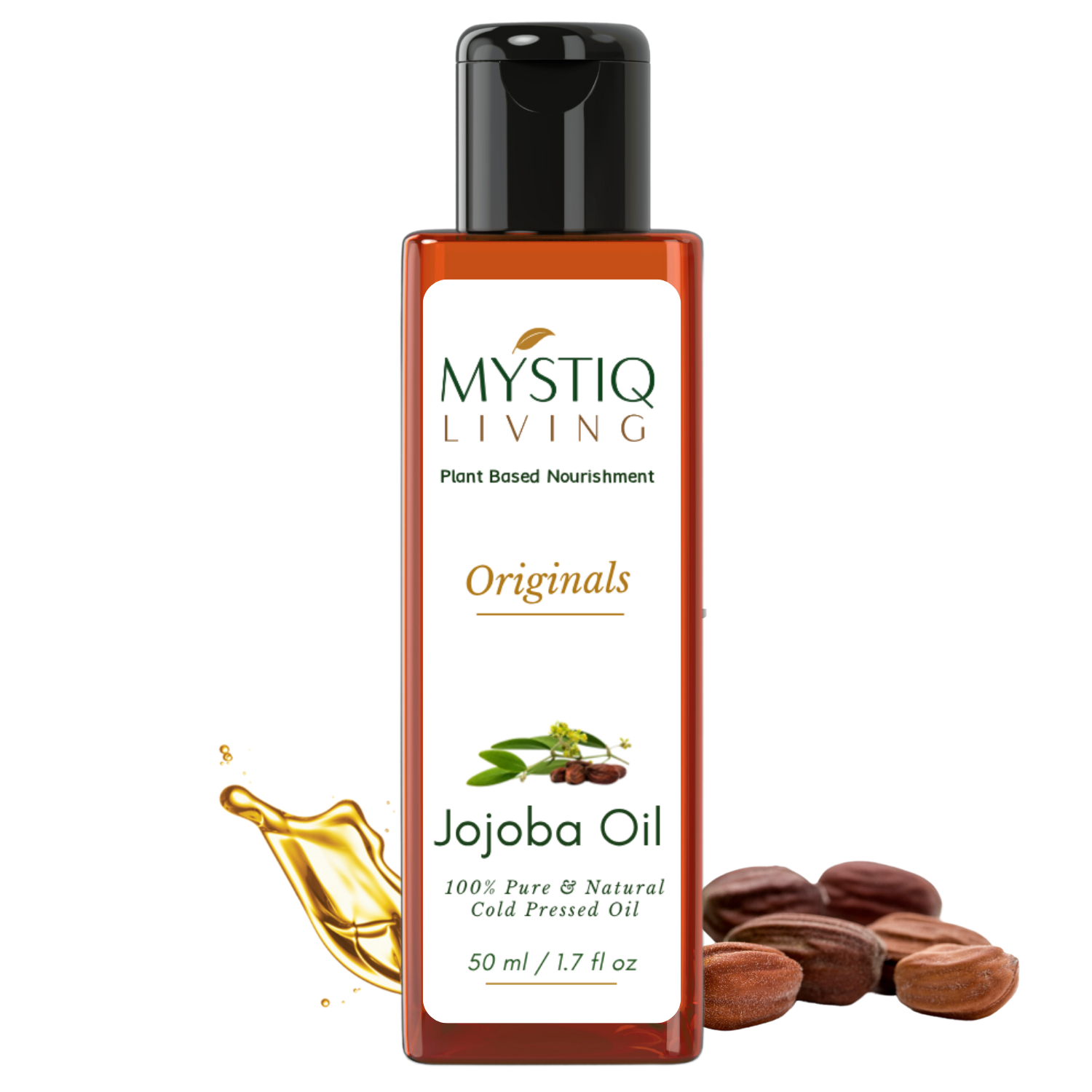
During barrier repair, the wrong oil can worsen inflammation. The right one accelerates healing.
Mystiq Living Jojoba Oil — cold-pressed, 100% pure. Jojoba is uniquely suited for barrier repair because its molecular structure closely mimics the skin's natural sebum. It doesn't just sit on the surface — it integrates with the skin's lipid layer, restoring what damage has stripped away.
Used as the final step after moisturizer, it reduces moisture loss, soothes irritation, and supports the lipid restoration that barrier repair depends on — without clogging pores or adding heaviness.
- Best for: jojoba oil for sensitive skin, dry, dehydrated, or damaged skin—safe for acne-prone skin due to its non-comedogenic rating
- Use with caution if: If you have a known allergy to jojoba or are under active dermatological treatment—patch test first
Step-by-Step Barrier Repair Routine
Morning Routine
Gentle Cleanser → Hydrating Toner (optional) → Soothing Serum (no actives) → Moisturizer → 1–2 drops Jojoba Oil → Sunscreen
Night Routine
Gentle Cleanser → Hydrating Serum → Barrier-Repair Moisturizer → 2–3 drops Jojoba Oil as final step
💡 Hydrate first, then seal — jojoba works best over a moisturized base. ⚠️ Avoid introducing any new active ingredients until skin feels stable for at least two consecutive weeks.
Realistic Results Timeline
| Timeline | What You'll Notice |
|---|---|
| Week 1–2 | Reduced redness and irritation, less tightness after cleansing |
| Week 3–4 | Improved texture, better hydration retention throughout the day |
| Week 5–6 | Stronger barrier, calmer skin, visible glow returning |
Repair takes consistency, not more products. Skin needs time to rebuild — don't interrupt the process by switching routines.
Myths vs Facts
| Myth | Fact |
|---|---|
| Oily skin doesn't need barrier repair | All skin types can have a compromised barrier |
| Stronger products fix damaged skin faster | Gentle, minimal care repairs skin more effectively |
| Oils clog pores during repair | Lightweight oils like jojoba actively support healing |
| Barrier repair takes months | Visible improvement typically starts within 2–3 weeks |
Frequently Asked Questions
Q. How do I know if my skin barrier is damaged?
A. Key signs are redness, stinging from products that didn't previously irritate, persistent dryness, and skin that feels tight after cleansing. If your usual routine suddenly causes discomfort, barrier damage is almost always the cause.
Q. Can I use actives during barrier repair?
A. No, pause retinol, acids, and vitamin C completely until skin stabilizes. Reintroduce them one at a time, slowly, only after skin tolerates your basic routine comfortably for two weeks.
Q. How long does full repair take?
A. Most people see meaningful improvement within 2–4 weeks. Full repair depends on the extent of damage but typically completes within 6 weeks of consistent gentle care.
Q. Is jojoba oil safe for acne-prone skin during repair?
A. Yes—jojoba is non-comedogenic and closely mimics natural sebum, making it one of the safest oils for acne-prone and sensitive skin during the repair phase.
Final Takeaway
Repairing your skin barrier isn't about adding more — it's about doing less, correctly. A simple routine focused on hydration, gentle sealing, and patience consistently outperforms any combination of actives on compromised skin.
If your skin feels reactive and unpredictable, don't reach for a stronger product. Restore the foundation first. With the right approach and a barrier-supportive ingredient like jojoba oil, healthy skin returns faster than most people expect.
Skin is a living ecosystem.
Not a problem to be corrected.
While the beauty industry pushes stronger acids and aggressive actives, the real cost is skin that becomes reactive, dependent, and sensitive over time. We've taken a different path — one that works with your skin, not against it.